I’ve had many people sit in my chair feeling frustrated. They’ve tried a new, expensive product, but their hair still isn’t behaving the way they want. Sometimes they tell me, “After wash day, my hair is always frizzy.” If you’ve recently looked for a curly hair specialist, you may be looking for the same answer they are: why does my hair feel difficult before styling even starts?
It’s understandable to think the answer is another styling product. But I would argue to look at the foundation first. Before we think about defining curls or choosing a styler, we need to understand what’s happening when the hair is cleansed and prepared for styling.
A good wash day gives your curls a clean foundation for everything that follows. When product buildup is removed and your hair is conditioned, you have a better canvas for applying your other products and styling your curls.
And frizz? It doesn’t automatically mean wash day has gone wrong. Sometimes, it means you need hydration, and sometimes the frizz is simply part of how curls move and take shape. I call this functional frizz: texture that can sit alongside healthy, well-cared-for curls.
Why a thorough wash day matters
Styling products work with the condition of your hair when you apply them. If product buildup is still sitting on your hair and scalp, your conditioner and styling products may not distribute as evenly as you’d like.
A thorough cleanse helps loosen and remove that buildup. For this, a clarifying shampoo can be useful, particularly if you regularly use gels, oils, creams or pomades. The American Academy of Dermatology also recommends considering a clarifying shampoo before a moisturising shampoo for people who use these styling products.
How to properly wash curly hair
1. Work the shampoo in your hands first
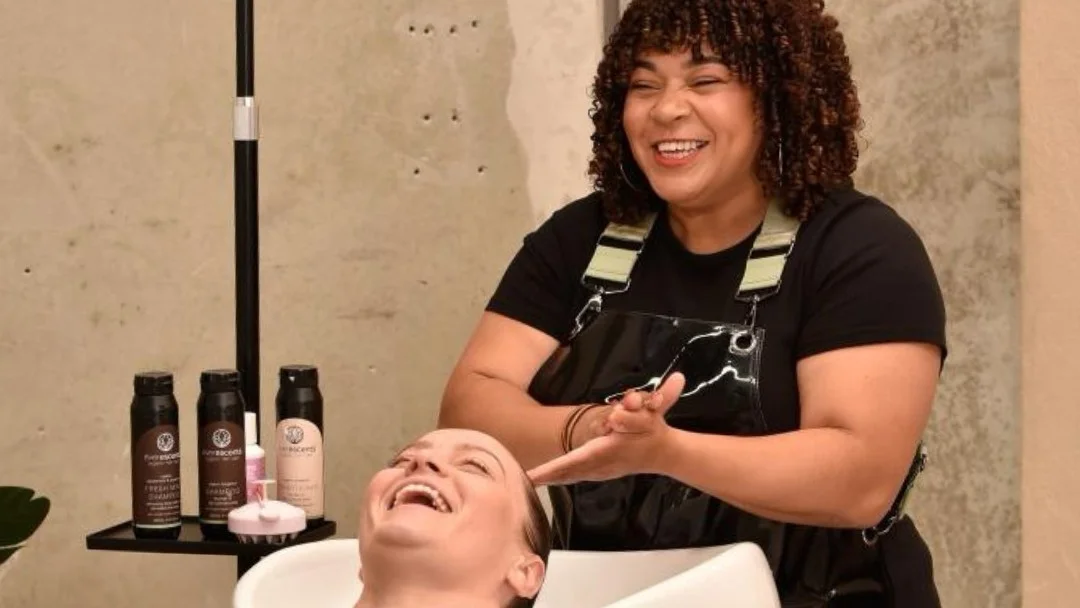
Do you “activate” the shampoo with your hands before applying it to your scalp? This is also called emulsifying the product. The aim is to spread it over your hands so it reaches the scalp more evenly.
Applying a concentrated amount to one small spot can mean more rubbing is needed to distribute it. Working it between your hands first gives you a more even starting point and can help reduce friction as you apply it.
2. Massage your scalp to loosen buildup
Use your fingertips, a scalp brush or a scalp rake to massage the scalp. Keep the pressure gentle and focus on the scalp rather than scrubbing the lengths of your hair.
Work in short back-and-forth movements, and then use gentle circular motions. Move across the whole scalp, including the hairline and nape. If you’re using a brush or rake, let it move lightly over the scalp without pulling it through your lengths.
The goal is to loosen buildup and cleanse the scalp comfortably. Avoid scratching with your nails or pressing hard.
3. Rinse before shampooing again
If your scalp still feels coated, rinse the first shampoo out fully and apply shampoo again. It’s better to wash off the first application and repeat than to keep adding more shampoo on top of it.
The first wash can help loosen product and residue. After rinsing, a second small application can reach the scalp more evenly. You may not need to shampoo twice every time, so let the condition of your scalp and hair guide you.
4. Apply a nourishing conditioner or treatment
Once your hair is clean, apply a nourishing conditioner or treatment. With buildup removed, the product has a cleaner surface to spread across, helping it condition your hair more evenly. Hair doesn’t literally absorb every product; the result depends on the formula and your hair’s condition.
Follow the directions on the product. Work it through the sections that need conditioning and detangle gently with your fingers or a wide-tooth comb if that suits your hair. Curly hair can knot easily, so take your time instead of pulling through tangles.
If you’re considering a curly hair hydration treatment in Mandurah, a consultation can help you understand what your hair needs and how an in-salon treatment might fit into your routine.
5. Pat your hair dry, then apply cream
When you’re ready to dry your hair, use a towel to gently pat or squeeze out excess water. Avoid rubbing. Rubbing can disturb your curls and create extra friction.
While your hair is still damp, apply a nourishing cream or leave-in product that suits your routine. Distribute it gently through your curls, using the amount that gives you the finish and feel you want.
6. Style, then air dry or diffuse
After applying your cream, use your chosen styling products and technique. The amount of water, product and handling your curls respond to can vary, so notice what works for your own hair.
You can air dry or use a diffuser. If you diffuse, use a comfortable heat and airflow setting and handle your curls gently as they dry. Once they’re dry, you can see how your wash-day foundation and styling choices worked together.
Why does curly hair get frizzy after wash day?
Frizz after wash day can have different causes. Your hair may need a more thorough cleanse, a different amount of conditioner, a change in how you apply your products or a gentler drying technique. Product buildup can also affect how your hair feels and responds to styling.
Start by noticing how your hair feels, not only how it looks. Does it feel coated, rough, tangled or difficult to style? Does it feel comfortable at the scalp? Does it form the shape you want while wet, then lose that shape as it dries?
Those observations can help you decide what to adjust. Try changing one part of your routine at a time, so you can tell what made a difference.
Functional frizz is part of having curly hair
Curly hair does not need to look perfectly uniform. Individual strands can sit outside a curl clump, and flyaways or a soft halo can be part of your hair’s natural movement. I call this functional frizz.
You can still pay attention to changes in how your hair feels or behaves. If it suddenly feels unusually rough, tangled or difficult to manage, take another look at your cleansing, conditioning and styling routine. But a few flyaways do not mean your wash day has gone wrong.
Build a routine around your hair
A curly hair specialist in Mandurah can help you understand which parts of a routine may suit you, and which rules may not fit your hair or lifestyle.
If you are searching for a textured hair stylist, look for someone who is willing to talk through your goals and routine first.
At Curl Identity, I start with understanding your hair and what you want from your routine. If you’d like support building a wash and styling routine around your curls and your life, explore my curl appointments in Mandurah.